

he relationship between social media use and life satisfaction changes across adolescent development. Our analyses of two UK datasets comprising 84,011 participants (10–80 yearsold) find that the cross-sectional relationship between self-reported estimates of social media use and life satisfaction ratings is most negative in younger adolescents. Furthermore, sex differences in this relationship are only present during this time. Longitudinal analyses of 17,409 participants (10–21 years old) suggest distinct developmental windows of sensitivity to social media in adolescence, when higher estimated social media use predicts a decrease in life satisfaction ratings one year later (and vice-vers a: lower estimated social media use predicts an increase in life satisfaction ratings). These windows occur at different ages formales (14–15 and 19 years old) and females (11–13 and 19 years old). Decreases in life satisfaction ratings also predicted subsequent increases in estimated social media use,however, these were not associated with age or sex.
Read the full article on Nature Communications.

Video games have become so good, and provide such a sensory smorgasbord of action and colour, that children are becoming dangerously addicted. They’re playing for days on end, to the exclusion of everything else in their lives, including school, friends and family.
Read More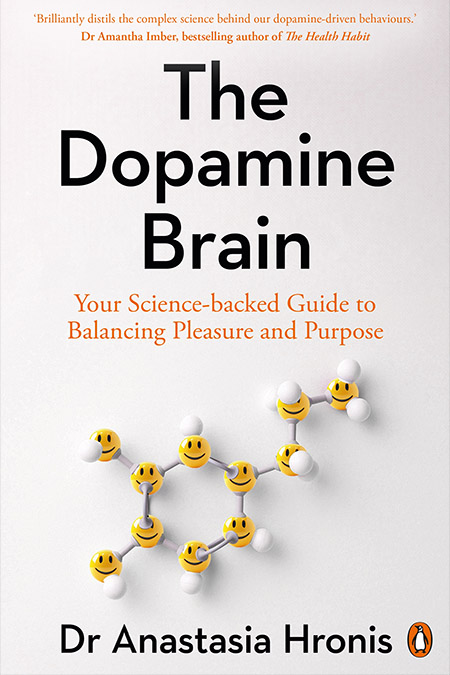
Clinical psychologist and founder of the Australian Institute for Human Wellness Dr Anastasia Hronis lifts the lid on dopamine to help us live by intention, not impulse. A transformative guide to breaking free from impulsive habits and living a more intentional life.
Read More
The field of internet addiction has experienced significant debates on conflicting epidemiology. This meta-analysis investigated the prevalence rates of generalized internet addiction (GIA) and internet gaming disorder (IGD).
Read MoreWe greatly appreciate your feedback on this website and would like to know what information you found useful and what services you would like to see next. Please take a couple of minutes to let us know.
survey


